
This past year the Institute for Future Conflict partnered with the Front Range Consortium (FRC) to publish articles from their National Security Scholars Program (NSSP). This program was open to students at Colorado College, Colorado State University, CU Boulder, Denver University, the United States Air Force Academy, and University of Colorado-Colorado Springs.
We will be publishing several articles over the course of the month showcasing the results of the NSSP's research.
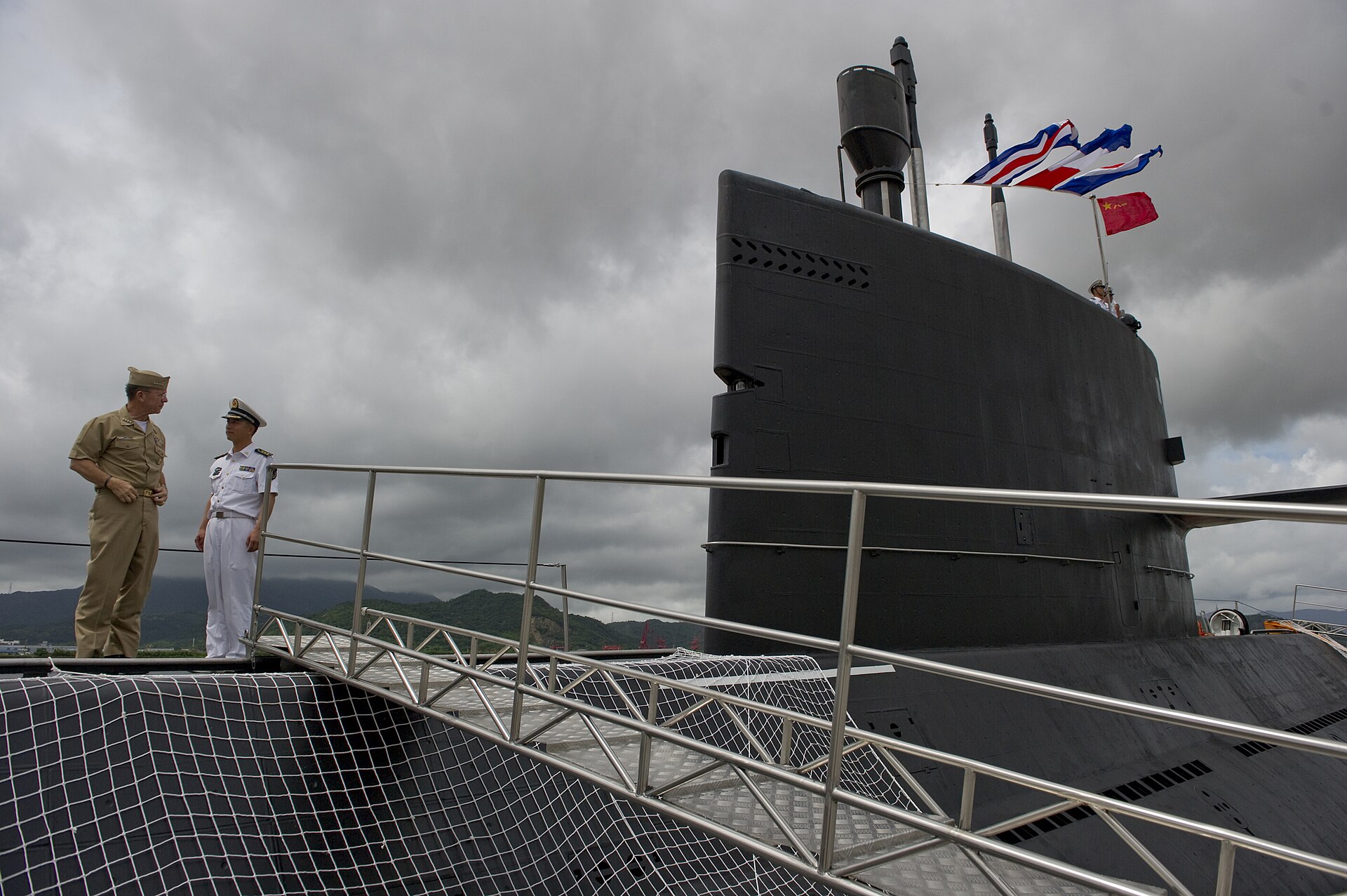
Nuclear deterrence depends on survivability. States seek secure second-strike forces across land, air, and sea to ensure that no adversary can eliminate their nuclear arsenal in a surprise attack. Of the three legs of the nuclear triad, ballistic missile submarines (SSBNs) are often the most survivable because they can remain hidden at sea for extended periods and are difficult to detect. China has recognized this advantage and is expanding and modernizing its sea-based nuclear deterrent. This development carries significant implications for Indo-Pacific stability. Rather than automatically strengthening deterrence, a more credible Chinese SSBN force could increase escalation risks by intensifying United States and allied anti-submarine warfare (ASW) operations during crises. As China enhances the survivability of its undersea deterrent, the United States must adapt its ASW posture and crisis management strategy to preserve deterrence without undermining regional stability.
Common Misperceptions about China’s submarine force
Conventional wisdom suggests that China’s submarine force remains technologically inferior to that of the United States. Critics will argue that many of China’s boats are diesel-electric, that its nuclear submarines are noisier than US Virginia-class counterparts, and thus easier to track. China has also historically struggled with continuous at-sea deterrent patrols. Under this assumption, the submarine expansion evidence presented below is more optical than operational. Some analysts suggest that China’s nuclear doctrine remains anchored in a relatively small, assured-retaliation posture, not a warfighting strategy.
This assumption is dangerous because it treats Chinese undersea inferiority as a permanent condition. But if US planners underestimate the pace of China’s submarine modernization, they risk failing to prepare for a force that is becoming more survivable, more operationally credible, and more relevant to crisis escalation in the Indo-Pacific. This stance also demotivates any need to develop anti-submarine warfare (ASW) systems for the Indo-Pacific. Instead, US strategists should take an honest look at the intelligence regarding China’s technological and strategic updates to their submarine fleet.
Diagnosing China’s nuclear submarine strategy
First, the scale of China’s naval expansion is historically significant. The Center for Strategic and International Studies (CSIS) notes that China’s submarine production capacity is expanding rapidly. A recent Department of Defense assessment anticipates the People’s Liberation Army Navy (PLAN) growing its submarine force to around 80 boats by 2035. While many of these will be conventional submarines, the steady modernization of nuclear-powered platforms, including Jin-class SSBNs and next-generation systems, indicates that Beijing’s naval strategy is prioritizing second-strike survivability. Taken together, these developments suggest force expansion and a deliberate effort to enhance the survivability and credibility of China’s sea-based deterrent.
The Department of Defense’s 2025 China Military Power Report similarly underscores improvements in China’s sea-based deterrent, including longer-range submarine-launched ballistic missiles that can hold targets at risk from more secure patrol areas. This same report also highlights broader modernization trends across China’s strategic forces. This includes improvements in command and control, early warning systems, and integrated joint operations that support more credible nuclear signaling. Coverage in US Naval Institute News reinforces that the Pentagon views China’s military development as increasingly sophisticated and systemic, with particular attention to the rapid expansion of undersea capabilities and missile ranges. This matters because survivability is the core logic of deterrence. A hidden submarine armed with nuclear weapons is far harder to neutralize than a missile silo or air base.
Second, China’s writings and exercises suggest a growing emphasis on force survivability and strategic signaling. Recent analysis shows that China is deeply concerned about the vulnerability of its nuclear forces. This could be a response to recent US advances in surveillance, reconnaissance, cyber capabilities, and ASW. If Beijing believes its land-based missiles or bomber forces are vulnerable to a disarming strike, it has strong incentives to double down on sea-based systems. Submarines, especially if quieter and armed with longer-range missiles, allow China to move away from a historically vulnerable, mostly land-based force structure toward a more resilient triad.
China is seeking to deny US operational access throughout the Indo-Pacific in the event of war, and while Russia-China joint exercises are decreasing in the region, the two undertook their first joint submarine patrol in 2025. CSIS’s China Power analysis documents rising operational tempo in the East and South China Seas, expanded patrols, and more frequent demonstrations of maritime presence near Taiwan and other contested areas. These operations complicate US and allied decision-making by blurring the line between routine activity and crisis preparation.
Third, if China’s SSBNs begin regular patrols in the South China Sea or venture further into the Pacific, US and allied ASW forces will inevitably track them. The CSIS naval buildup analysis warns that maintaining a subsurface advantage is vital for the United States. In a crisis over Taiwan, for example, intensified US ASW operations might unintentionally signal an attempt to neutralize China’s second-strike capability. The broader pattern of heightened military activity documented by CSIS (2025) increases the likelihood that United States and Chinese forces will operate in proximity during politically sensitive moments. That perception could create escalatory pressures, precisely the dynamic nuclear deterrence seeks to avoid. The measures the United States takes to preserve its advantage at sea could undermine strategic stability if not carefully calibrated. Taken together, these developments suggest force expansion and a deliberate effort to enhance the survivability and credibility of China’s sea-based deterrent.
Implications for the United States Deterrence Strategy
As China’s sea-based deterrent becomes more survivable, the challenge for the United States shifts from simple monitoring to managing escalation risks associated with tracking these forces. The preceding analysis suggests that the common assumption that China’s nuclear submarine fleet will always and inevitably lag behind the United States is wrong. Given China’s scale of production, doctrinal changes, increased missile range, and overall modernization, it should be clear to the reader that China is invested in catching up. Such improvements will alter the strategic balance in the Pacific if the United States does nothing.
To counter these moves, Washington must first preserve its qualitative advantage in anti-submarine warfare. This includes sustained investment in advanced sonar systems, seabed sensor networks, unmanned underwater vehicles, artificial intelligence–assisted tracking, and secure undersea communications.
Second, the United States should refine crisis management doctrine, particularly by clarifying how submarine tracking operations are conducted and communicated during periods of heightened tension, to reduce the risk of misinterpretation by Chinese forces. Routine ASW patrols and intelligence collection are strategically necessary, but their signaling effects vary depending on context. During peacetime, quiet tracking reinforces readiness. However, during a crisis, highly visible ASW operations could be interpreted as preparation for a disarming strike against China’s second-strike forces. United States planners should develop clearer escalation thresholds, rules of engagement, and internal decision-making frameworks that distinguish between routine monitoring and escalatory maneuvers.
Third, nuclear considerations must be more deeply integrated into Indo-Pacific conventional planning, particularly in potential Taiwan contingencies, where anti-submarine warfare operations may intersect with China’s nuclear deterrent and increase the risk of unintended escalation. Much US regional strategy focuses on conventional deterrence, alliance reassurance, and freedom of navigation. Yet China’s submarine expansion increasingly supports its nuclear survivability, not solely regional power projection. Taiwan contingency planning, force posture decisions, and alliance coordination must account for the possibility that conventional maritime operations could intersect with China’s nuclear deterrent patrols. Failing to integrate nuclear risk into regional planning could unintentionally escalate into a crisis.
Fourth, the United States should deepen coordination with allies such as Japan and Australia on anti-submarine warfare, including intelligence sharing and joint patrol strategies, to ensure a consistent and controlled approach to monitoring Chinese SSBN activity. Japan, Australia, and other regional partners play growing roles in ASW and maritime domain awareness. While integration strengthens deterrence, it also heightens sensitivity to escalation. The United States must ensure allied exercises and intelligence-sharing arrangements are structured to reinforce defensive objectives rather than signal coordinated efforts to neutralize China’s strategic deterrent. Strategic transparency among allies reduces miscalculation risks and strengthens collective stability.
Finally, Washington should explore selective confidence-building measures focused on nuclear survivability. While broad arms control agreements with China may remain politically difficult, narrower mechanisms, such as crisis hotlines, notifications of major exercises, or dialogue on nuclear doctrine, could reduce uncertainty during periods of tension. The strategy seeks to preserve advantage while minimizing escalation risks arising from misperception.
Modern deterrence depends heavily on submarines, which derive their power from unpredictability. No adversary can be sure where they are, or whether they can be eliminated. China’s expanding undersea force clearly indicates its desire to maintain a second-strike capability. But greater survivability for the People's Liberation Army Navy will not automatically translate into greater stability for the region. As both Washington and Beijing improve their ability to find or hide submarines, the underwater domain becomes a central arena of great power competition. The future of strategic stability in the Indo-Pacific may depend less on visible shows of force than on invisible contests over what survives beneath the sea.
Maeve Daley is a senior undergraduate student in Public Policy and a master’s student in International Security at the Josef Korbel School of Global and Public Affairs at the University of Denver.
The views expressed are those of the author and do not reflect the official policy or position of the US Air Force, Defense Department, or the US government.